
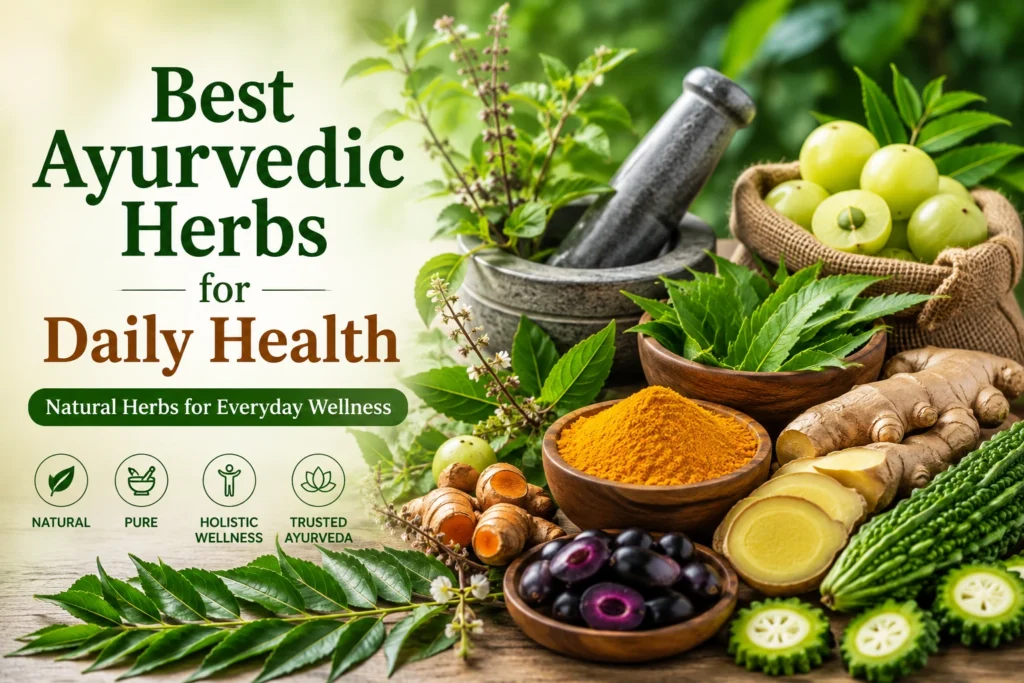
Best Ayurvedic Herbs for Daily Health: Natural Herbs for Everyday Wellness
Table of Contents
- Introduction
- Why Ayurvedic Herbs Are Important for Daily Health
- Best Ayurvedic Herbs for Daily Health
- Ashwagandha
- Turmeric
- Neem
- Amla
- Tulsi
- Ginger
- Giloy
- Karela
- Jamun
- Benefits of Ayurvedic Herbs for Everyday Wellness
- How to Include Ayurvedic Herbs in Your Daily Routine
- Ayurvedic Herbs and a Healthy Lifestyle
- How to Choose Quality Ayurvedic Herbs
- Things to Consider Before Using Ayurvedic Herbs
- Frequently Asked Questions
- Conclusion
Introduction
Ayurveda is one of the world’s traditional systems of wellness, with a long history of using plants, herbs, food and lifestyle practices to support overall wellbeing. Today, many people are looking for natural ways to maintain their health and build healthier daily routines. This is where Best Ayurvedic Herbs for Daily Health can become an important topic for anyone interested in natural wellness.
Ayurvedic herbs are traditionally used for different aspects of everyday wellbeing, including digestion, immunity, energy, skin health and general vitality. Herbs such as tulsi, turmeric, amla, neem, ginger, ashwagandha, karela and jamun are commonly associated with traditional Indian wellness practices.
However, herbs should not be considered a replacement for a balanced diet, regular physical activity or professional medical care. Their traditional uses can complement a healthy lifestyle when used appropriately.
In this guide, we will explore some of the Best Ayurvedic Herbs for Daily Health, their traditional uses and simple ways to include them in a wellness-focused routine.
Why Ayurvedic Herbs Are Important for Daily Health
Modern lifestyles can often involve irregular meals, long working hours, limited physical activity and increased stress. Maintaining good health therefore requires consistent attention to nutrition, sleep, movement and overall lifestyle.
Ayurvedic herbs can be incorporated into a wellness routine because many traditional herbs contain naturally occurring plant compounds. Different herbs have traditionally been associated with different areas of wellbeing.
For example, turmeric is traditionally valued for its antioxidant properties, while ginger is commonly used in traditional practices to support digestion. Amla is widely known as a source of vitamin C, and tulsi has a long history of use in Ayurveda.
The goal should not be to depend on one particular herb. Instead, the focus should be on creating a balanced lifestyle in which nutritious food, adequate sleep, exercise and appropriate herbal products work together.
Best Ayurvedic Herbs for Daily Health
There are many herbs used in Ayurveda, but some are particularly well known in Indian traditional wellness practices.
1. Ashwagandha
Ashwagandha is one of the most widely recognized Ayurvedic herbs. Traditionally, it has been used as a rejuvenating herb and is commonly associated with energy, relaxation and general wellbeing.
People often include ashwagandha in their wellness routine during periods of demanding work or stressful lifestyles. It is available in different forms, including powders, capsules and extracts.
Traditional Uses of Ashwagandha
Ashwagandha has traditionally been used to support:
- General vitality
- Relaxation and calmness
- Healthy energy levels
- Everyday wellness
- A balanced lifestyle
As with any herbal supplement, the appropriate form and quantity depend on individual circumstances.
2. Turmeric
Turmeric is a popular Indian spice and a traditional Ayurvedic ingredient. Its bright yellow colour comes largely from naturally occurring compounds called curcuminoids.
Turmeric has traditionally been used in food and wellness practices for its antioxidant and general wellness properties.
How to Use Turmeric
Turmeric can easily be included in everyday meals. It can be added to vegetables, soups, curries and warm beverages.
Combining turmeric with a nutritious diet is a simple way to incorporate this traditional ingredient into daily wellness.
3. Neem
Neem has an important place in traditional Indian wellness practices. Different parts of the neem plant have traditionally been used for various purposes.
Neem is particularly well known for its traditional association with skin and general wellness.
Neem for Everyday Wellness
Neem leaves and neem-based preparations have traditionally been used in different forms. However, concentrated neem products should be used responsibly and according to appropriate guidance.
Choosing a properly prepared herbal product is important when incorporating neem into a regular routine.
4. Amla
Amla, also known as Indian gooseberry, is another well-known Ayurvedic ingredient. It is naturally rich in vitamin C and is traditionally valued for its nutritional and antioxidant properties.
Amla can be consumed as fresh fruit, powder, juice or as an ingredient in traditional formulations.
Benefits of Amla in a Wellness Routine
Amla is commonly associated with:
- Antioxidant support
- Nutritional wellness
- Hair and skin care
- Digestive wellness
- Everyday vitality
Including amla as part of a varied and nutritious diet can be an easy addition to a natural wellness routine.
5. Tulsi
Tulsi, commonly known as holy basil, is a traditional Indian herb that has been used for generations.
Tulsi leaves are commonly consumed as herbal tea and are traditionally associated with respiratory and general wellness.
Adding Tulsi to Your Routine
Tulsi tea can be an easy way to incorporate this herb into everyday life. It can be consumed as part of a balanced routine, particularly when someone prefers herbal beverages over heavily sweetened drinks.
6. Ginger
Ginger is both a culinary ingredient and a traditional herbal ingredient. It has long been used in Ayurveda and other traditional systems, particularly for digestive wellness.
Ginger can be added to meals, herbal teas and warm beverages.
Ginger and Digestive Wellness
Ginger is traditionally associated with supporting digestion and maintaining digestive comfort. A small amount of fresh ginger can add flavour to meals while also becoming part of a natural wellness routine.
7. Giloy
Giloy, also known as Tinospora cordifolia, is a traditional Ayurvedic herb that has been used in Indian wellness practices.
It is commonly associated with general wellness and traditionally used in various Ayurvedic preparations.
Because herbal preparations can vary significantly in concentration and quality, it is important to choose products from reliable sources and follow recommended usage instructions.
8. Karela
Karela, or bitter gourd, is a popular vegetable in Indian cuisine and is also used traditionally in Ayurveda.
Karela is often discussed in relation to metabolic wellness and healthy blood sugar levels. It contains naturally occurring plant compounds and is commonly consumed as a vegetable, juice or powder.
Karela in Daily Wellness
Karela can be included in meals or used in appropriately prepared herbal products. People interested in blood sugar wellness should remember that no single herb or food can replace medical treatment or healthy lifestyle habits.
For individuals taking medication, especially medication affecting blood sugar, professional advice is important before using concentrated karela products.
9. Jamun
Jamun, also known as Indian blackberry, is another traditional Indian fruit associated with wellness. Jamun fruit and its seeds have been used in traditional practices.
Jamun is particularly popular in discussions around healthy blood sugar management and digestive wellness.
Jamun as Part of a Healthy Lifestyle
Fresh jamun can be enjoyed as a seasonal fruit. Jamun seed preparations are also available in powdered and other forms.
When choosing a jamun-based product, look for clear ingredient information and responsible usage instructions.
Benefits of Ayurvedic Herbs for Everyday Wellness
The Best Ayurvedic Herbs for Daily Health can support different aspects of a wellness-focused lifestyle, but their benefits depend on the particular herb, preparation and individual needs.
Some commonly discussed areas include:
Digestive Wellness
Ginger, amla and other traditional herbs are commonly incorporated into routines focused on digestive wellbeing.
A healthy digestive routine should also include adequate fibre, hydration, nutritious food and regular physical activity.
Antioxidant Support
Many fruits, vegetables and herbs contain naturally occurring antioxidants. Turmeric and amla are particularly well known for their antioxidant components.
A varied diet containing colourful fruits and vegetables is still one of the most important ways to obtain beneficial plant compounds.
General Immunity and Wellness
Tulsi, amla and other Ayurvedic herbs are traditionally associated with general wellness and immune support.
Rather than relying on a single ingredient, maintaining adequate sleep, balanced nutrition, hydration and physical activity provides a stronger foundation for overall health.
Healthy Metabolism
Karela and jamun are traditionally discussed in relation to metabolic wellness and healthy blood sugar levels.
However, people with diabetes or those taking blood sugar medication should consult a healthcare professional before using concentrated herbal supplements.
How to Include Ayurvedic Herbs in Your Daily Routine
The easiest way to make herbs part of your lifestyle is to keep your routine simple and consistent.
Start With Food
Whenever possible, include herbs and spices through normal meals. Turmeric, ginger and fresh amla can easily become part of a nutritious diet.
Choose Appropriate Herbal Products
Herbs are available as powders, teas, juices, capsules and extracts. Concentration can vary significantly between products.
Always check the ingredient list, serving instructions and storage information before using an herbal product.
Follow Recommended Dosage
More is not necessarily better when it comes to herbal products. Concentrated extracts can contain much higher amounts of active compounds than ordinary food portions.
Follow the manufacturer’s recommended serving and avoid taking multiple concentrated products without understanding their ingredients.
Ayurvedic Herbs and a Healthy Lifestyle
The Best Ayurvedic Herbs for Daily Health should be viewed as one part of a broader wellness approach.
A healthy lifestyle includes:
- Eating a balanced diet
- Drinking enough water
- Getting adequate sleep
- Staying physically active
- Managing everyday stress
- Limiting highly processed foods
- Maintaining regular health check-ups
Herbs can complement these habits, but they cannot compensate for an unhealthy lifestyle.
For example, someone interested in maintaining healthy blood sugar should focus on balanced meals, regular movement, healthy body weight where appropriate and professional medical guidance. Adding a traditional ingredient such as karela or jamun may complement that lifestyle, but it should not replace prescribed treatment.
How to Choose Quality Ayurvedic Herbs
With many herbal products available online and offline, choosing a reliable product is important.
Check the Ingredients
Look for products that clearly mention the ingredients and their quantities where applicable.
Look for Transparent Information
A trustworthy herbal brand should provide clear information about ingredients, usage, storage and product quality.
Avoid Unnecessary Claims
Be cautious about products that promise to cure serious diseases or guarantee immediate results. Responsible Ayurvedic wellness focuses on supporting health rather than making unrealistic promises.
Choose Products According to Your Needs
Not every herb is appropriate for every person. Your age, diet, medications and health circumstances can affect whether a particular herbal product is suitable.
Things to Consider Before Using Ayurvedic Herbs
Although many herbs are traditionally used as foods or wellness ingredients, natural does not automatically mean risk-free.
Some herbs can interact with medications or may not be appropriate during pregnancy, breastfeeding or certain health conditions.
If you are taking prescription medication, have a chronic health condition or plan to use concentrated herbal supplements regularly, consult a qualified healthcare professional first.
It is also important to distinguish between herbs used as culinary ingredients and concentrated extracts or supplements. The latter can provide substantially higher doses of certain compounds.
Frequently Asked Questions
What are the best Ayurvedic herbs for daily health?
Some commonly used Ayurvedic herbs include tulsi, turmeric, amla, ginger, neem, ashwagandha, giloy, karela and jamun. The most suitable herb depends on individual needs and the intended use.
Can Ayurvedic herbs be used every day?
Some herbs and foods can be incorporated into everyday diets, while concentrated supplements may require more careful use. Always follow product instructions and seek professional advice when necessary.
Which Ayurvedic herbs are traditionally used for digestion?
Ginger and amla are among the traditional ingredients commonly associated with digestive wellness. A balanced diet, adequate fibre, hydration and physical activity are also important for digestive health.
Are karela and jamun traditionally used for blood sugar wellness?
Yes. Karela and jamun are traditionally associated with healthy blood sugar and metabolic wellness. However, they should not be considered a replacement for prescribed diabetes treatment.
Can I use multiple Ayurvedic herbs together?
It depends on the herbs, quantities and your individual circumstances. Combining several concentrated supplements may increase the risk of unwanted effects or interactions. Professional guidance is advisable when using multiple herbal products.
Are Ayurvedic herbs a replacement for medicines?
No. Ayurvedic herbs and supplements should not be used as a replacement for prescribed medication without professional medical advice.
Conclusion
The Best Ayurvedic Herbs for Daily Health can be valuable additions to a natural wellness routine when used appropriately. Traditional ingredients such as turmeric, tulsi, amla, ginger, neem, ashwagandha, giloy, karela and jamun each have a long history of use in Indian wellness practices.
The key to better health is not relying on one herb. Instead, combine appropriate herbal ingredients with nutritious food, regular physical activity, adequate sleep, hydration and healthy lifestyle habits.
If you are exploring Ayurvedic wellness, choose products with transparent ingredients and responsible usage information. For people taking medication or managing an ongoing health condition, professional guidance is especially important before starting concentrated herbal supplements.
By making informed choices and focusing on consistent healthy habits, Ayurvedic herbs can become a thoughtful part of an everyday wellness lifestyle.